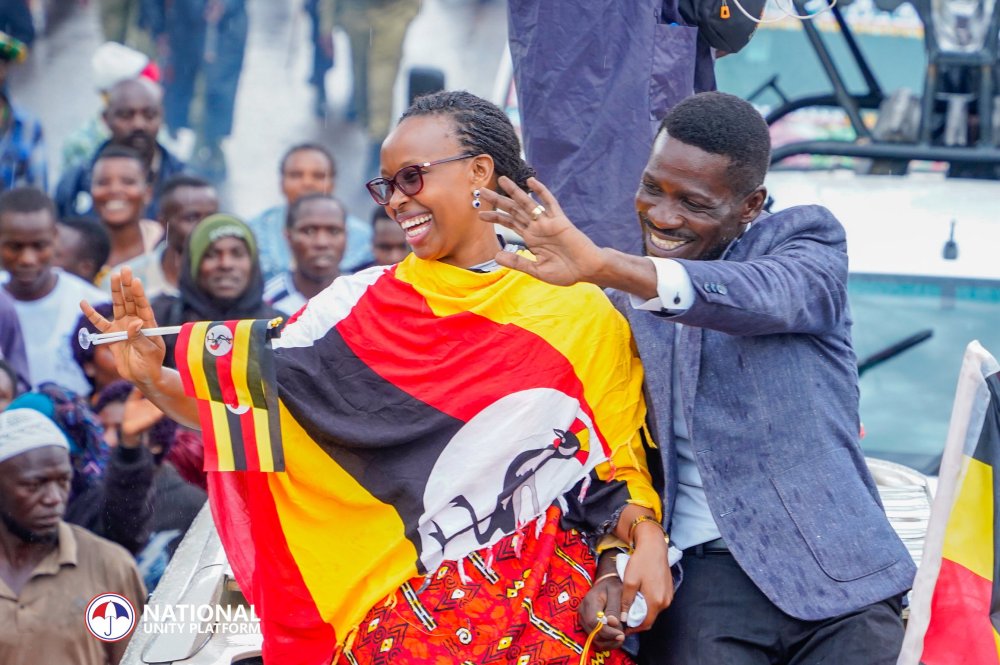
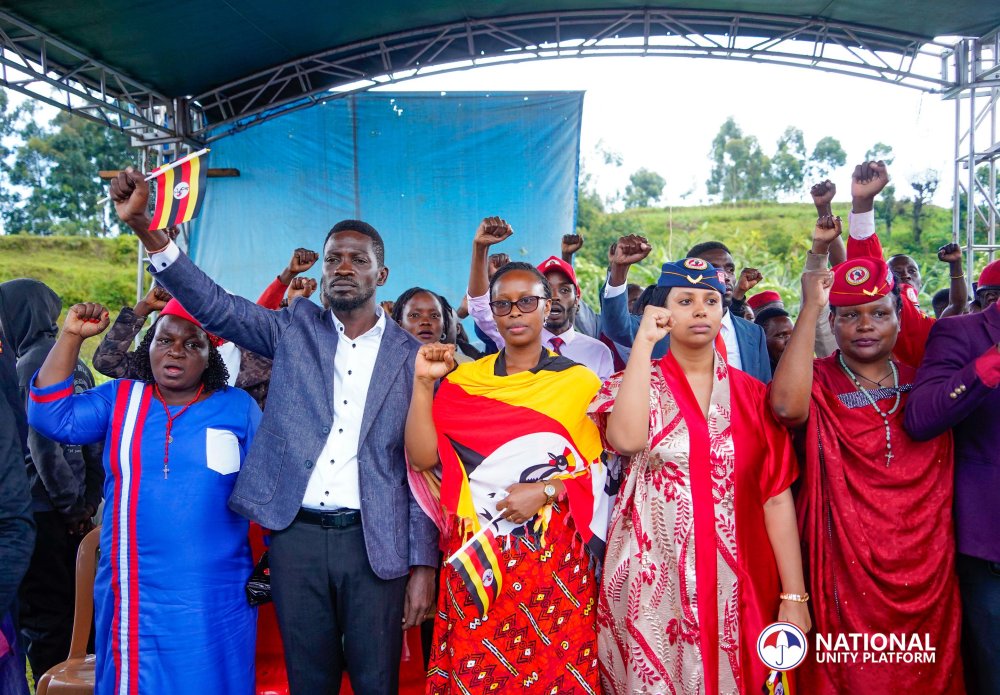
Bobi Wine and his wife Barbara campaign in Kisoro speaking Kinyarwanda


Ugandan musician-turned-politician Robert Kyagulanyi Ssentamu, popularly known as Bobi Wine, has drawn attention during his presidential campaign after he and his wife Barbara Itungo Kyagulanyi addressed supporters in Kinyarwanda while campaigning in Kisoro District.
During the rally, Bobi Wine took the microphone and ended his speech with the phrase: “Ndagusaba byose ubivuge, byose ubivuge” (“I ask you to say everything, say it all”). His wife Barbara followed, proudly noting that she had taught him the language.
“You see, I taught him. You heard that he knows it. Give me marks. They said they gave me 100% because I taught him. Now I will speak the language you understand. We are together, right? You understand what I say? I came to ask you to make me the First Lady,” Barbara told the crowd.
Barbara’s ability to speak Kinyarwanda is not accidental. She hails from Ntungamo District, a region where multiple languages are spoken, including Kinyarwanda and Runyankole. Many families in the area also trace their roots to Rwanda, making the language familiar to local communities.

Bobi Wine is contesting the presidency under the National Unity Platform (NUP), positioning himself as the main challenger to Uganda’s long-standing leadership. The general election is scheduled for January 15, 2026, and his campaign has emphasized inclusivity, grassroots connection, and cultural identity.
By speaking Kinyarwanda in Kisoro, Bobi Wine and Barbara demonstrated a strategic outreach to border communities, highlighting cultural ties and strengthening their bond with voters who share linguistic and ancestral connections with Rwanda. The moment has since gone viral, sparking conversations about language, identity, and politics in Uganda’s upcoming election.


Itangazo ryo kurangisha ibyangombwa

“Ubuhuza bwa Togo nibwo shingiro” Afurika Yunze ubumwe ku makimbirane yo mu Burasirazuba bwa Congo