
News
How Rwanda’s national airline became a strategic investment engine

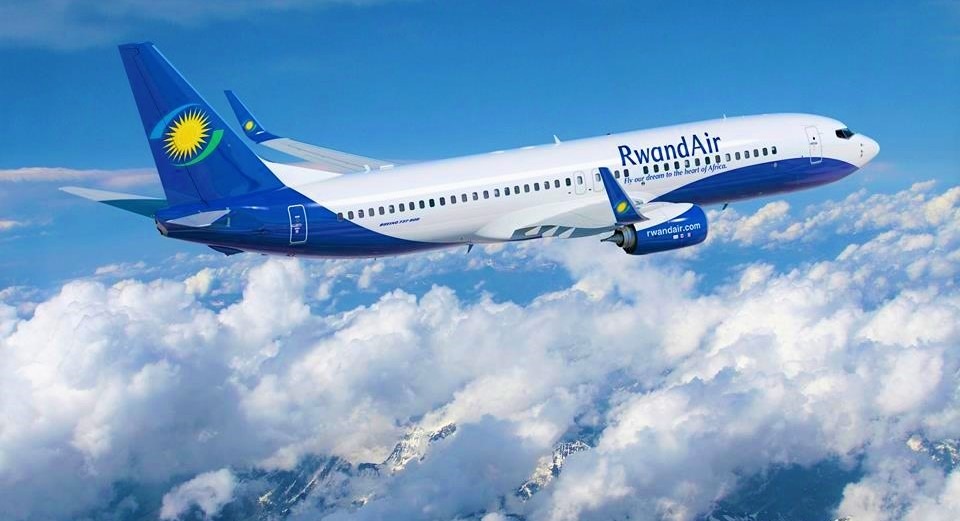
RwandAir has rapidly evolved from a standard national carrier into a pillar of Rwanda’s economic and strategic ambition. According to Kigali Today, the airline now operates a fleet of 16 aircraft, 3 Airbus A330s, 6 Boeing 737s (including the new -800 models), 2 Bombardier CRJ900s, and 2 Dash 8 Q400s.
Its network spans one domestic direction and 25 international routes across 18 countries.
This expansion is clearly part of a larger vision, linking Kigali and by extension Rwanda to the global economy via Bugesera International Airport, and positioning the country as a hub for tourism, business, and investment.

Key financial metrics underscore the shift: Rwanda earned US$121.7 million in foreign exchange from visitor arrivals in Q2 2025, with US$101.1 million (83%) attributed to air arrivals, highlighting aviation’s critical role in foreign currency generation.
Furthermore, RwandAir’s revenue surged to US$464.2 million in 2023, up from US$255 million in 2022 (an increase of roughly 80%).
By targeting a fleet of 28 aircraft within five years, Rwanda is signaling that this is not mere national prestige but a core economic infrastructure investment.
Yet, beneath the optimism lies a set of operational and strategic challenges. Rapid expansion in fleet size and route count demands substantial capital, skilled workforce, regulatory oversight, and competitive resilience against established carriers.
As Kigali Today notes, the decision to cut fares by 50% until June 2026 is aimed at making RwandAir the “first choice” for passengers, even if profitability takes a short-term hit.
The underlying question is whether Rwanda’s wider aviation ecosystem, airport capacity, ground handling, tourism pipelines, maintenance capabilities can scale in tandem.
In a broader sense, RwandAir’s story mirrors Rwanda’s national narrative: from landlocked constraints to connectivity ambition, from cost centers to value creators. The airline’s growth directly supports tourism (notably gorilla tourism), business travel, and trade logistics that feed into Rwanda’s goal of becoming an African hub. As the article states: “The government’s investment in RwandAir is not mere subsidy. It is an investment in Rwanda’s future of global connectivity, competition, and progress.”


RIB yahakanye amakuru ko yahagamaje G Tuff kubera ‘indirimbo ye y’ibishegu

RIB yatanze gasopo ya nyuma ku banyamakuru ba siporo bandagazanya


